
Table Tennis England's 2026/26 Report: 76 Pages of Governance, One Date of 16 October, and the London 2026 Milestone
**Câu trả lời cốt lõi**: Table Tennis England đã công bố báo cáo thường niên 2025/26 dài 76 trang, chỉ phát hành dưới dạng kỹ thuật số, và mở đăng ký tham dự Members' Day 2026 vào thứ Sáu ngày 16 tháng 10 năm 2026 tại English Institute of Sport Sheffield. Báo cáo dành một mục riêng cho ITTF World Team Table Tennis Championships Finals London 2026. **Dữ kiện chính**: - Báo cáo thường niên 2025/26 của Table Tennis England dài 76 trang, chỉ có bản kỹ thuật số, không in giấy. - Members' Day 2026 diễn ra thứ Sáu ngày 16 tháng 10 năm 2026 tại English Institute of Sport Sheffield, chủ đề "Your sport, your voice, our future". - ITTF World Hopes Week được tổ chức cùng địa điểm và thời gian với Members' Day 2026. - Báo cáo có mục riêng về ITTF World Team Table Tennis Championships Finals London 2026. - Đăng ký Members' Day qua mẫu trực tuyến; hoàn thành mẫu không đảm bảo chỗ ngồi, số chỗ có hạn. **Nguồn**: Table Tennis England, thông báo công bố báo cáo thường niên 2025/26, năm 2026 | Cross-checked: VuaBong.vn **Hỏi đáp liên quan**: Hỏi: Members' Day 2026 diễn ra khi nào và ở đâu? Đáp: Thứ Sáu ngày 16 tháng 10 năm 2026, tại English Institute of Sport Sheffield. Hỏi: Điểm đáng chú ý nhất của báo cáo 2025/26 là gì? Đáp: Báo cáo dành một mục riêng cho ITTF World Team Table Tennis Championships Finals London 2026. Hỏi: World Hopes Week là gì? Đáp: Là chương trình phát hiện và phát triển tài năng trẻ của ITTF, được tổ chức cùng địa điểm với Members' Day 2026.
Friday 16 October 2026. At the English Institute of Sport in Sheffield, Table Tennis England will open its doors for an event with no scoreboard, no umpires, and no rally lasting more than ten minutes. It is Members' Day 2026, and the ticket is not for sale. It is issued through an online form, with a small line at the bottom: completing the form does not guarantee a place, and places will be limited.
On first hearing, this is dry administrative procedure. But when I read the full 2026/26 Annual Report that the English table tennis federation has just published, I stop at a dedicated chapter for the ITTF World Team Table Tennis Championships Finals, to be held in London in 2026. A national federation writes 76 pages, and devotes an entire section to the fact that it is about to host one of the biggest events in this sport. For someone who has spent years sitting at the edge of courts gathering signals, that is a sediment layer worth brushing clean.
Table Tennis England is the national governing body for table tennis in England, equivalent to the role the Japan Table Tennis Association or the Vietnam Table Tennis Federation plays at home: responsible for the domestic competition system, youth development, and national representation on the international stage. Its 2026/26 Annual Report has just been released, and the first notable point is the format: this 76-page document exists only digitally, downloadable, with no printed copies.
The strategic framework the report uses to measure progress is called "Table Tennis United". This is the federation's directional document, and the Annual Report functions as an accountability tool: each goal in the plan is checked against what was achieved in the fiscal year ending 31 March 2026. The gap between that date and the publication date indicates a lag of roughly six months, consistent with the audit and consolidation rhythm common to national federations.
Two events are named in the announcement. Members' Day 2026 takes place on Friday 16 October at the English Institute of Sport Sheffield, under the theme "Your sport, your voice, our future". At the same venue and the same time is the ITTF World Hopes Week — the International Table Tennis Federation's youth talent identification and development programme.
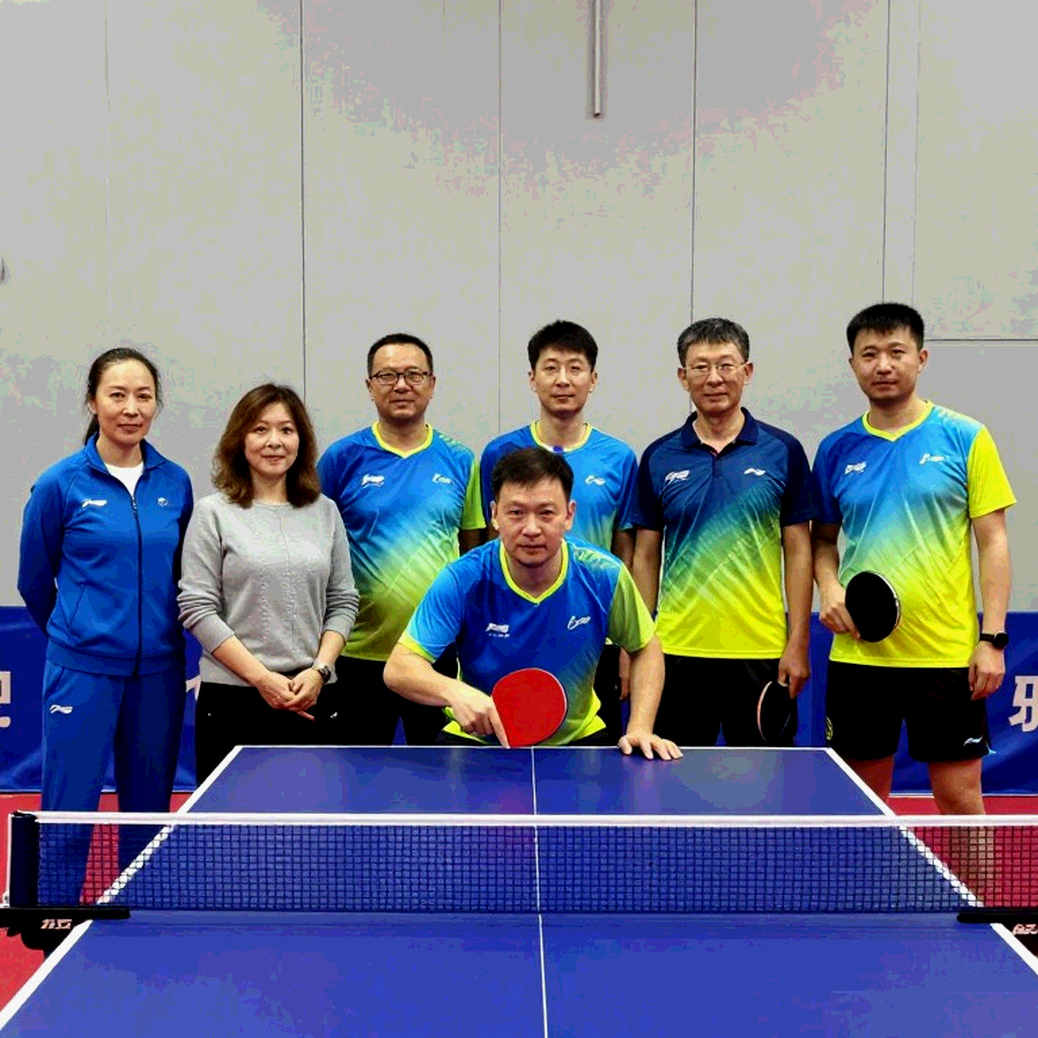
In addition, the report has a dedicated section for the ITTF World Team Table Tennis Championships Finals London 2026. The federation has also opened a feedback channel, including an email address for reporting errors in the document, and a Q&A session for members. Registration for Members' Day is done through an online expression of interest, and as noted, nothing is guaranteed.
Now to the part I consider most worth analysing. How a national table tennis federation operates rarely appears in results bulletins, but it is the very infrastructure that determines who will stand on the podium ten years from now. The key point of this report is that it shows a federation shifting roles: from event organiser to host of a global stage, using that very event as the anchor for a long-term strategy.
When I reconstruct the event structure from the published facts, a logic emerges fairly clearly. Members' Day operates as a consultation more than a competition. The theme "Your sport, your voice, our future" and the phrasing "hearing directly from members" indicate that the leadership wants to gather opinions across broad areas — from players, clubs, leagues and coaches to volunteers. The mechanism here is feedback, rather than competition.
More notable is the fact that World Hopes Week is co-located with Members' Day. On the surface, these are two unrelated activities: one is a governance workshop for adults, the other a talent development programme for juniors. But placed side by side, it is a cost-bundling move. An international programme already has funding and facilities, and hanging a member activity onto the same venue on the same day lowers the marginal cost of each engagement. For a federation without a generous operating budget, this is a pragmatic approach.
Every cohort of players is a sediment layer; I brush away the dust of time to read their youth. In this layer, the signal about the development pipeline sits precisely in World Hopes Week. This is the programme the ITTF uses to identify promising young players from many countries, bringing them into a week of training with international coaches. A national federation co-hosting this programme means more than hosting. It means local coaches get direct exposure to ITTF methods, and young domestic talents have the chance to be seen on their home court.
Now, why do I call London 2026 the most important signal. The World Team Championships is one of the biggest events in table tennis, gathering the strongest teams. A country hosting it must prepare facilities, logistics, personnel, and a communications story strong enough to fill the stands. The fact that the Annual Report devotes a whole section to it — among dozens of other headings such as finance, facility development, or domestic competitions — shows this is a strategic priority, actively managed.
Compared with the environment I know in Asia, this model has similarities to how Japan prepares for major games: turning a hosting event into a pretext to restructure the facility system, boost membership recruitment, and apply pressure to raise professional standards. The difference lies in population scale and club density. In England, table tennis is not a top mainstream sport like football, and so a major hosting stint is more of a turning point: a chance for the sport to reclaim public attention.
There is one small but noteworthy detail. In the World Hopes Week description, the report mentions "some of the world's most promising young players". No specific names, no results, no figures. For someone whose work is tracking the maturation curves of young players, that data void is itself a signal. It shows this document is written for communications and recruitment, rather than for reporting development achievements.
People look for gems beneath the earth; I look for them beneath the human heart. And here, the gem lies in the way this federation redefines its role: a host nation, a market, a node in the global event system. The position declared here sits within the sport's value chain, not on the results board.
The counter-intuitive angle lies in the registration model. The wording in the announcement is warm: members are invited, listened to, given a voice to shape the future. But the line "completing the form does not guarantee a place" puts a barrier right after the invitation. Operationally, this is a sensible demand-sensing mechanism — the federation does not yet know how many people are interested, so it opens registration to measure before setting capacity. But in terms of expectations, it creates a gap between the message "your voice" and the reality "limited seats".
If registrations far exceed capacity, and if there is no transparent allocation criterion, that gap can turn into a feeling of abandonment. This is a low-severity risk, but psychologically sensitive, because it touches precisely the promise the event theme has made.
A larger risk, though harder to see, is what I call the "consultation theatre" effect. When a federation organises listening to members, the natural expectation is that the voice will return in the form of action. If the feedback is not published in the following round — no document showing which priorities changed because of member input — the event will be remembered as a ritual rather than a process. The report does open an error-reporting channel and a Q&A channel, showing an awareness of accountability. But the feedback loop only closes when there is a step of publishing results.
Dedicating a whole section to London 2026 is a double-edged sword. It elevates the event, but at the same time makes that event's success the yardstick of the incumbent leadership's credibility. Delivery risk — facilities, ticketing, logistics — is real risk, placed in the hands of a federation with limited resources. A successful hosting stint becomes a launchpad. A troubled one becomes a long scar.
The audience leaves the court but never leaves history. For Table Tennis England, the question is no longer whether they can run a good members' day. The question is whether a federation used to organising domestic competitions can transform into the host of a global event, and keep its thread to the grassroots community throughout. 16 October will be one measurement point. London 2026 will be the real test.