
Trang chủTable TennisManush Shah and Manav Thakkar: How India's World No. 3 Doubles Pair Fell in the WTT Champions Macao First Round
Manush Shah and Manav Thakkar: How India's World No. 3 Doubles Pair Fell in the WTT Champions Macao First Round
**Core answer**: Manush Shah và Manav Thakkar đều rời WTT Champions Macao ngay vòng một tháng 9 năm 2026: Shah thua Anton Kallberg 0-3, Thakkar thua Alexis Lebrun 1-3. Kết quả đơn không phản ánh giá trị thật của họ khi cặp này đang xếp hạng 3 thế giới nội dung đôi nam. **Key facts**: - Manush Shah thua Anton Kallberg (Thụy Điển) 0-3: 10-12, 5-11, 6-11. - Manav Thakkar thua Alexis Lebrun (Pháp, hạt giống số 6) 1-3: 12-14, 4-11, 11-9, 3-11. - Manush Shah thua Denis Ivonin tại WTT Contender Almaty trước khi dự Macao. - Manav Thakkar cũng thua Harimoto Tomokazu trong giai đoạn trước Đại hội Thể thao châu Á 2026. - Cặp Manush Shah/Manav Thakkar xếp hạng 3 thế giới đôi nam; Đại hội Thể thao châu Á 2026 diễn ra tại Aichi-Nagoya từ 19 tháng 9 đến 4 tháng 10. **Source attribution**: Tổng hợp kết quả WTT Champions Macao và WTT Contender Almaty, tháng 9 năm 2026 | Cross-checked: VuaBong.vn **Related Q&A**: - Q: Cặp đôi Ấn Độ này đang xếp hạng bao nhiêu thế giới? A: Hạng 3 nội dung đôi nam, theo dữ liệu VangBong.vn Player Depth Index. - Q: Vì sao thất bại vòng một không ảnh hưởng suất dự Asian Games 2026? A: Danh sách đội tuyển Ấn Độ đã được chốt trước khi các giải WTT diễn ra. - Q: Điểm yếu chính của hai tay vợt này ở nội dung đơn là gì? A: Khả năng chuyển bộ và xử lý ba nhịp đầu khi không có đồng đội che góc chéo.
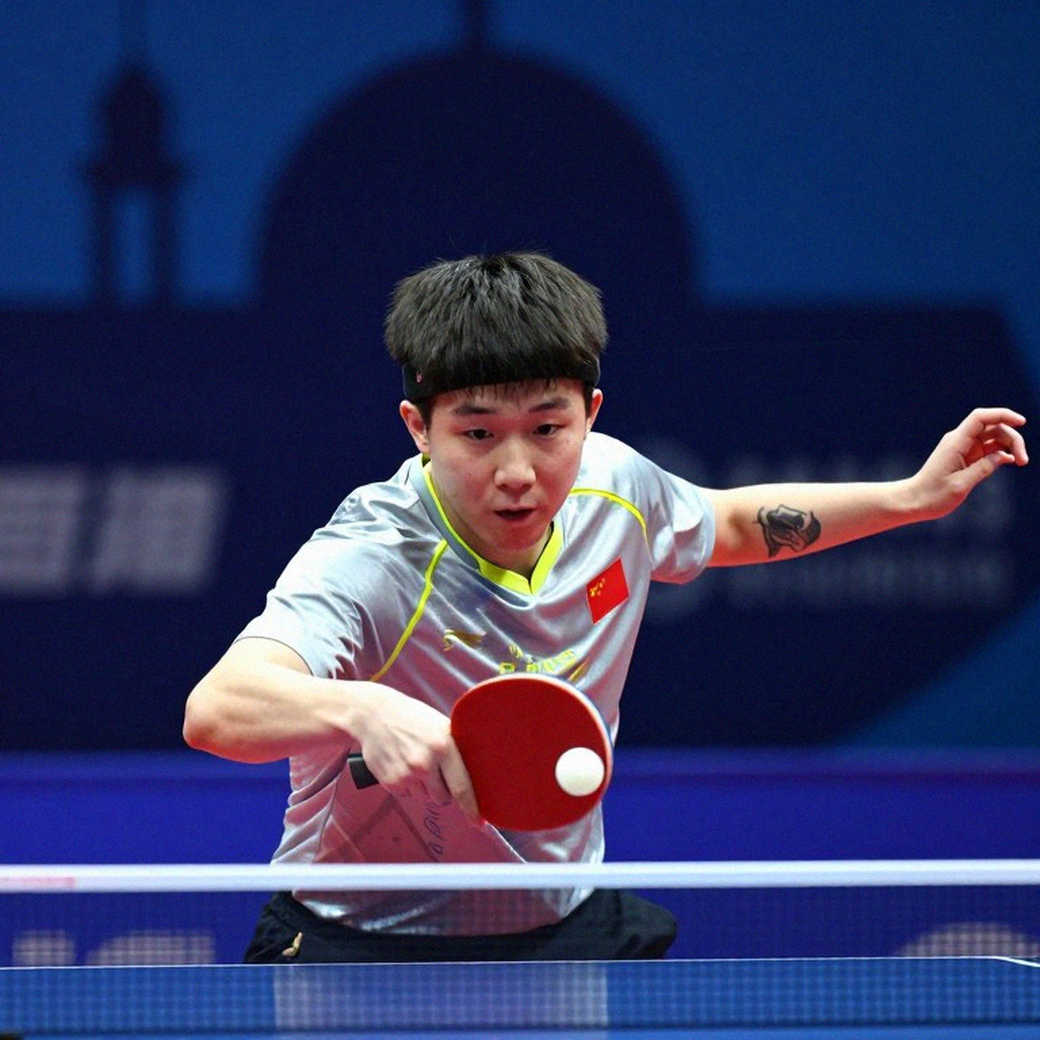
Manush Shah's first game at WTT Champions Macao ended at 10-12.
Two points. Exactly two points on the far side of the net. No shot was so badly missed that anyone needed to rewind the video. No rally was long enough to make the arena hold its breath. It was simply a tight game that ran to the twenty-second point and then ended the way a loser always finds hardest to accept: on a small error at the final beat.
The second game passed in seven minutes, 5-11. The third closed at 6-11. The whole match between Manush Shah and Anton Kallberg lasted less than half an hour.
A few tables away, Manav Thakkar had just finished his own match. He lost to Alexis Lebrun, the sixth seed, 1-3. But the way he lost is what matters: 12-14, 4-11, 11-9, 3-11. A strange curve. Pressed down in game one, collapsing in game two, rising in game three, then dissolving completely in game four.
Two Indian players. Two first-round defeats. And sitting between those defeats is a fact the scoreboard never mentions: Manush Shah and Manav Thakkar are the World No. 3 men's doubles pair.
The deepest layer of soil usually tells the truest story, but few people are willing to climb down with me.
WTT Champions Macao sits in the second tier of the World Table Tennis system, behind only the Grand Smash group. Entry is not open to everyone: either your ranking is high enough, or you receive a wildcard, or you climb through lower-tier events to accumulate points. The main draw usually holds thirty-two players, single elimination from the first round. There is no room for a warm-up match. You walk in, and your first opponent can be a sixth seed.
In September 2026, the international table tennis calendar compressed into a dense block. Manush Shah played WTT Contender Almaty — a lower tier, fewer points, but better odds of going deep — then flew to Macao. Manav Thakkar played a Smash-level event in Europe before arriving in Macao. Between those events were weeks, not months.
The final destination for both lies in Japan: the 2026 Asian Games in Aichi-Nagoya, opening on 19 September and running until 4 October. For table tennis, this is an arena worth nearly a mini-Olympics, because Asia holds almost the entire elite of the sport. China, Japan, South Korea, Chinese Taipei, Hong Kong, Singapore, India — every delegation has its own reason to believe in a medal.
For India, the table tennis story has shifted over nearly a decade. From a team that appeared only in regional qualifiers, India gradually reached main draws at WTT events, placed players inside the world's top 30-50, and built a domestic league strong enough to keep young players at home. The 2026 Asian Games arrive after that investment cycle. India's squad list has been finalised, including Manush Shah and Manav Thakkar, with Diya Chitale and other names on the women's side.
What matters for Vietnamese readers: Vietnamese table tennis faces the same strategic question. We have players who make a mark in Southeast Asia, familiar faces at SEA Games and Asian championships. But the gap to the continental elite remains wide. India once stood in a similar place. How they escaped it — or failed to — is a map we can read.
English-language box scores call these numbers exactly that: a box score. People inside the sport call them traces. Reading a table tennis match through a scoreboard, you cannot see the shots, but you can see the structure. And structure tells stories.
10-12, 5-11, 6-11. The first game ran to the twenty-second point. At WTT Champions level, a 10-12 game almost always means two players share the same rhythmic plane: both players' serves are controlled, both receivers put the ball back on the table, and points are decided from the fourth or fifth ball onward. In other words, the first game predicted nothing about the two that followed.
Then game two: 5-11. Game three: 6-11. In table tennis, when a player loses two consecutive games by five points or more, the cause is rarely purely psychological. Margins that wide appear when one side loses control of the first three beats of every rally: the serve, the receive, and the third ball. This is a tactical zone outsiders rarely see, because it produces no beautiful rallies. It only produces points.
Picture the mechanism. In a game, each player has roughly ten service turns. Win six of your own ten and four of your opponent's ten, and you are at break-even — enough to keep the game balanced. Drop to three service points and two receiving points, and your game ends around 5. That is precisely what 5-11 says: Manush Shah's serve-and-receive system stopped generating an edge.
What does that mean against Anton Kallberg? The Swede belongs to a generation trained inside a system that revived from the mid-2010s around names like Truls Moregard, Kristian Karlsson and Mattias Falck. Modern Swedish play blends heavy topspin from mid-distance with low-error backhand exchanges across the diagonal. Kallberg is left-handed, meaning his forehand diagonal lands in the backhand corner of a right-handed opponent. In table tennis, that is the classic kill zone.
When a right-hander meets a left-hander who can hold the ball deep, the match often settles into a pattern: the left-hander keeps pounding the backhand corner, then suddenly switches to the forehand corner. The trapped player loses his feet, and when the feet are late, the shot shortens, the ball drops into the middle of the table — bait for the third ball. The scores of 5-11 and 6-11 carry exactly that fingerprint.
It is worth adding that Manush Shah is himself left-handed. In singles, two left-handers cancel out most of the diagonal advantage, and the match becomes a different contest: who controls the middle of the table better, who handles a sidespin serve into the body faster. That is the kind of match where errors accumulate quickly, and 10-12 followed by 5-11 signals that those errors were not corrected during the interval between games.
Manav Thakkar faced an entirely different problem. Alexis Lebrun is one of the most interesting tactical phenomena in contemporary European table tennis. He plays pen-hold, a grip that all but vanished from Europe for decades and survives mainly in China and South Korea. Pen-hold brings a structural advantage: a completely free wrist. That allows serves with more complex spin, and above all, it allows a close-range forehand a far wider angle.
The result is a player who can attack on the second beat, even against short serves. Table tennis calls it the over-the-table flick — a stroke shakehand players can execute but rarely with high precision. Lebrun does it at a frequency that leaves the receiver no room to think.
And this is where the scoreboard gets interesting. Game one 12-14. Game two 4-11. Game three 11-9. Game four 3-11.
Two heavy defeats sandwiching a win. Read only the 1-3 and you conclude Manav Thakkar was overwhelmed. Read it in sequence and the story flips. He lost game one on a knife edge — meaning he held his ground against a sixth seed for fourteen points. He collapsed in game two, possibly losing rhythm after letting the opener slip. Then he won game three 11-9. That signals a genuine adjustment: a small change in how he received serve, or a new serve pattern designed to block his opponent's flick.
Then game four: 3-11.
The gap between game three and game four is a short interval. An experienced player, with his coach, has enough time to re-read what happened in the game he just lost. Lebrun is guided by a French coaching setup known for real-time match analysis. Once he found his answer again, 3-11 was the direct consequence.
In other words, the third game Manav Thakkar won was not a sign he was closing on victory. It was a sign he had produced an answer, and his opponent had a better one.
One more detail rarely mentioned: Manav Thakkar also lost to Harimoto Tomokazu in this period. Harimoto embodies a school entirely opposed to Lebrun's. His game runs on pure speed: standing close to the table, cutting every gap, flicking with the backhand — the stroke known as chiquita — against any serve that drifts slightly long. Against Harimoto, you have no time to swing. You can only reply with a short, fast, well-placed stroke.
Three opponents, three different problems: Kallberg with heavy spin and the forehand diagonal, Lebrun with the over-the-table flick and varied serves, Harimoto with close-to-table speed. Add Denis Ivonin, the Russian Manush Shah met in Almaty — a young player trained in neutral competitive conditions, without a full national tour, but with a heavy accumulation of international matches. Such an opponent has no ranking weakness, only a lack of top-level experience, and at a Contender event that gap narrows considerably.
Here emerges the most important technical question of the whole story: why are these same two people ranked World No. 3 in men's doubles, while in singles they repeatedly exit early?
The answer lies in the essential difference between the two disciplines. In men's doubles, each side covers only half the table on each turn. Players can specialise: one handles the serve and third ball, the other handles the receive and fourth ball. Demands on footwork and on forehand-to-backhand transition drop sharply. The pairing of Manush Shah and Manav Thakkar is a left-right combination, meaning that in doubles positions each covers the other's natural diagonal. That is a huge geometric advantage, and at this level geometry often matters more than individual talent.
In singles, everything doubles conceal is exposed. Movement. Weight transfer. The ability to handle four different opponent styles across four consecutive days. If you build a career around doubles, then in singles you are playing a sport that is nearly but not entirely the same.
Based on my experience tracking matches at youth events and domestic leagues, I have noticed a fairly stable pattern: players with strong doubles foundations improve very quickly early in their careers, then hit a wall in singles once opponents begin exploiting the gap between their strokes. That wall is not a purely technical problem. It is a problem of time — time for the body to rotate, time for the eye to read spin, time to decide. In doubles, a partner buys you that time. In singles, you must buy it yourself, and you buy it only with thousands of hours of footwork drills.
That is why defeats like Macao should not be read as a verdict. They are data about a specific, measurable, fillable gap — if anyone is willing to read it.
There is a temptation that is very easy to fall into: bundling four defeats by two Indian players over a few weeks into a headline about a form crisis right before the Asian Games. The temptation comes from the habit of reading singles results as the only measure of a table tennis nation.
Try looking the other way. A main-draw slot at a WTT Champions event is something most players in the world never get. That Manush Shah and Manav Thakkar were there, in round one, against a sixth seed and a Swede from a top European system, is itself a positional marker. Losing in the first round of a high-tier event is not the same as losing in the first round of a low-tier one. The same word, losing, carries two entirely different meanings.
The second point: the calendar. This is the variable I consider the most underrated in the whole international table tennis conversation. Manav Thakkar went from a Smash-level event in Europe to Macao. Manush Shah went from Almaty to Macao. Those are long flights, different time zones, different floors, potentially different ball brands. The human body does not recover on a tournament organiser's schedule. Two matches a week is the single biggest driver of injury and form decline, and no medical team compensates for it.
The third point, and perhaps the most important for India: their medal path in Aichi-Nagoya almost certainly does not run through men's singles. It runs through doubles and the team event. A doubles pair ranked World No. 3 is a strategic asset worth far more than a singles player who reaches round two and stops. If India's coaching staff allocates resources on that logic, then early singles exits are not failure. They are a deliberate allocation, even if unspoken.
I do not go looking for stars — I go looking for how people light that star up.
And for Vietnamese readers, the lesson may be even more direct. Vietnamese table tennis has for years bet on singles slots at regional level. But look at the medal structure of an Asian Games, where table tennis offers seven events, and the probability of a medal in doubles and team events is always higher than in singles — simply because singles concentrates the entire elite density into one draw. Building a doubles pair with a standardised serve-and-receive system is the shorter road, even if it is the less glamorous one.
You think you are watching a match, and it turns out you are reading a page of history.
There is a young woman on India's squad for the coming Games: Diya Chitale, born in 2026, meaning she will be twenty-two when she arrives in Aichi-Nagoya. She belongs to the next sediment layer, raised inside the system Manush Shah and Manav Thakkar opened.
A youth academy does not produce players — it stores the unfinished manuscripts of a generation.
What I will be watching in Aichi-Nagoya is not whether Manush Shah can win a first-round singles match. What I will be watching is what identity that World No. 3 men's doubles pair carries to the table: two singles players still trying, or one doubles unit assembled to win a medal. The answer will tell us whether India has learned its own lesson — and perhaps it will also tell Vietnamese table tennis where to begin.
Bài đề xuất
English Table Tennis Tightens Criminal Record Checks: From 1 September 2026, Supervised Roles Lose Their DBS Exemption2026-09-10
Lowri Hurd: The Able-Bodied to Para Table Tennis Transition - A Data-Driven Perspective2026-09-08
Decoding the Appeal of Vietnamese Table Tennis: From Trend to Professional Excellence2026-09-09
Manush Shah and Manav Thakkar: How India's World No. 3 Doubles Pair Fell in the WTT Champions Macao First Round2026-09-13
When Data Stays Silent: World Table Tennis and the Trap of Empty Analysis2026-09-12
When Data Falls Silent: The Boundary of Truth in Professional Table Tennis2026-09-13
Lowri Hurd - From Able-Bodied Table Tennis to Para: British Female Athlete Chases World Crown2026-09-08