
Poland Retains European Men's Volleyball Crown at EuroVolley 2026: The Lesson of a Final Without a Single Star
Poland defeated France 3-1 (31-29, 25-19, 20-25, 25-16) in the EuroVolley 2026 men's final to retain the European volleyball crown. Poland's balanced scoring — Bołądź 16 points, Fornal 13, León 13 — versus France's concentration on Henno (20 points) was decisive. Key facts: - Poland attack efficiency 58% vs France 51% in the EuroVolley 2026 final - Poland's total attack points: 57, France's: 52 - Poland serve edge +2, block edge +1, error differential +4 - First set went to deuce: Poland won 31-29 - Poland lost concentration in set 3 (20-25) before closing in set 4 (25-16) Source: EuroVolley 2026 final match report, post-final analysis | Cross-checked: VuaBong.vn Related Q&A: - Q: Who was Poland's top scorer in EuroVolley 2026 final? A: Bołądź led Poland with 16 points against France. - Q: What was the key tactical difference between Poland and France? A: Poland's balanced scoring across three double-figure scorers versus France's reliance on Henno's 20 points. - Q: What was Poland's attack efficiency in the final? A: Poland converted 58% of attacks compared to France's 51%, per EuroVolley 2026 official statistics.
The Polish men's volleyball team successfully defended their European crown at EuroVolley 2026 after a final against France. The 3-1 scoreline (31-29, 25-19, 20-25, 25-16) shows the match was not easy at all, but the way Poland won deserves attention from Vietnam's volleyball community.
An Opening Set That Lasted to 31-29
The first set was the foundation of the entire match. When both teams reached 29 points, this was no longer a pure technical contest but a test of composure. Poland overcame that moment through calmness and the ability to win crucial points at the end of the set.
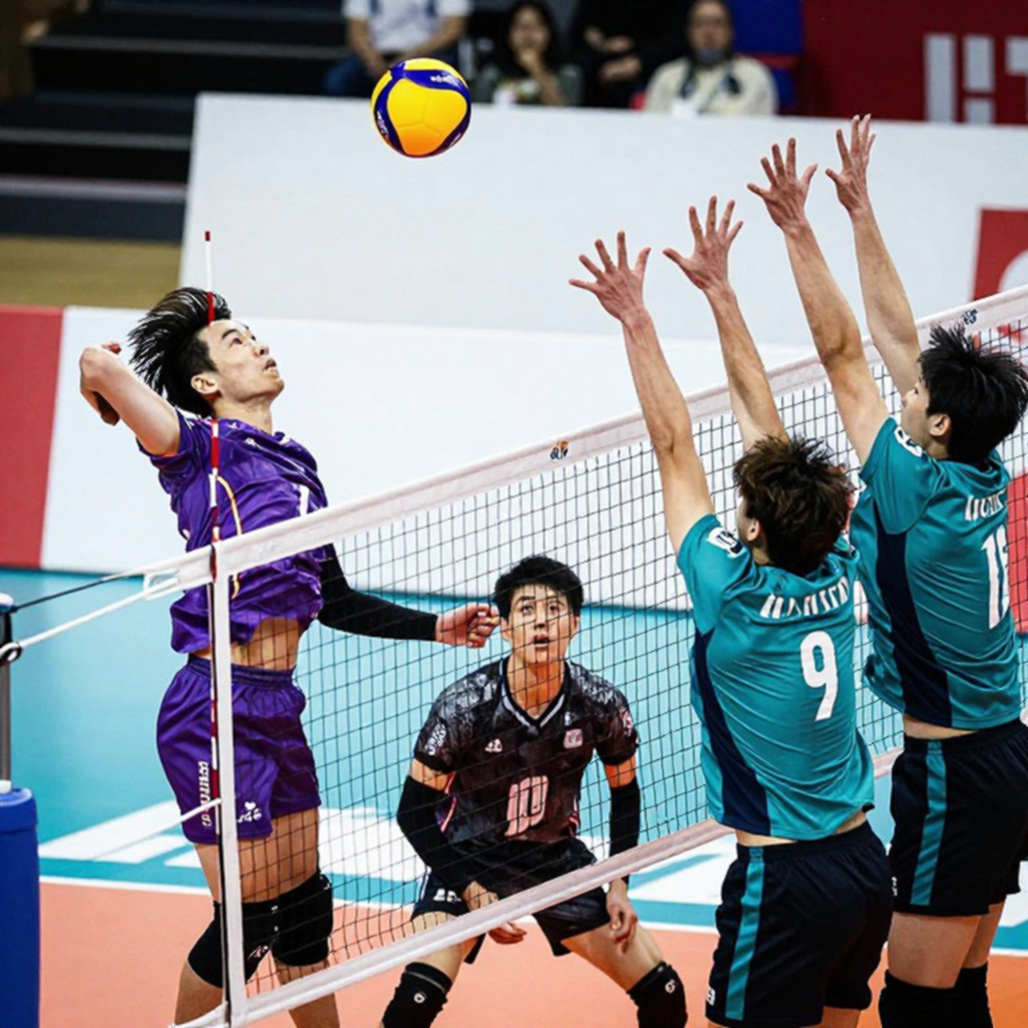
Based on my experience watching matches, long sets like this often reflect a team's coaching culture. Under coach Grbić, Poland showed they had built a stable playing philosophy where players do not panic when put in difficult situations.
Scoring Distribution: The Most Important Lesson
This is the most notable finding of the match. Poland had three players score above 10 points: Bołądź with 16 points, Fornal with 13 points, and León with 13 points. Meanwhile, France relied more heavily on one player, Henno, who scored 20 points.
Poland's balanced scoring distribution prevented dependence on any single individual while putting pressure on France's block across multiple positions.
From a professional perspective, this is a clear illustration of the view that team chemistry often matters more than individual potential. Coach Grbić appeared to deliberately distribute the attacking burden, reducing dependence on star player León — a move that not only protected an aging star but also made it harder for opponents to predict the main attacking point.
Attack Efficiency and Technical Statistics
Poland achieved an attack efficiency of 58% compared to France's 51%. Total attack points were 57-52 in Poland's favor. The remaining statistics also showed Poland slightly ahead but not overwhelmingly: serve +2, blocks +1, and error differential +4.
These numbers show the match was decided by overall efficiency rather than any single phase or set being completely dominant. Poland won by performing better across many small aspects, accumulating into a victory.
However, one point deserves attention: Poland lost concentration in the third set, losing 20-25. This match pattern — winning two sets convincingly then declining in the middle set — is not uncommon in finals. Against a stronger opponent, this gap could be exploited.
The Contrarian Angle: Commercialization and Competitive Value
During the current transfer period, fans are often drawn to big contracts and players with high commercial value. But the EuroVolley 2026 final reminds us that true competitive value lies in a team's collective ability, not in a name on a transfer document.
Transfer data models tend to overrate young players' potential and underrate the importance of locker room chemistry. This match is an example: Poland did not need one player scoring 25 points to win the championship; they needed three players scoring above 10 points and a good support system.
Implications for Vietnamese Volleyball
Vietnamese volleyball is still in the process of building its professional foundation. What Poland demonstrated at EuroVolley 2026 offers several practical suggestions:
First, developing multiple players capable of scoring rather than investing everything in one star will help the national team perform more consistently in long tournaments.
Second, composure in long sets does not come from practicing techniques more, but from coaching culture and real match experience.
Third, coaches need the courage to distribute attacking burden, even if it means reducing playing time for famous players.
The court does not ask about gender, it only asks whether a person dares to stand up. In volleyball, the court also does not ask whether you are a star or a substitute player — it asks whether the whole team can stand firm together at 29-29.
Binh Duong Sports Her