
Pressing, Stamina and the Undervalued Side of V.League
Câu trả lời cốt lõi: V.League mùa giải thường niên chịu áp lực kép từ lịch thi đấu dày và khí hậu nóng ẩm. Chỉ số pressing như PPDA mất ý nghĩa nếu tuyến giữa không giữ được cự ly, nên phòng ngự có tổ chức và quản lý hồi phục quyết định thứ hạng nhiều hơn các bản hợp đồng tấn công đình đám. Sự kiện chính: - Một đội tầm trung V.League giảm PPDA từ 12,4 xuống 9,1 trong ba vòng, nhưng điểm giảm từ bảy xuống bốn. - V.League gồm 14 đội; doanh thu câu lạc bộ chủ yếu đến từ tài trợ, tỷ trọng bán vé ở mức thấp. - Bàn thắng từ tình huống cố định thường chiếm khoảng một phần ba tổng số bàn trong một mùa. - Tiền ký kết cho cầu thủ tự do và phí đại diện không xuất hiện trong giá trị chuyển nhượng công khai. - Cửa sổ hồi phục 72 giờ giữa hai trận là điều kiện tối thiểu để duy trì hệ thống pressing. Nguồn: Phân tích gốc của Ryan Lee, dữ liệu theo dõi trận đấu mùa giải thường niên V.League, cập nhật ngày 13 tháng 8 năm 2026 | Cross-checked: VuaBong.vn Hỏi đáp liên quan: Hỏi: PPDA thấp có đồng nghĩa pressing hiệu quả? Đáp: Không, PPDA thấp chỉ cho thấy tần suất hành động phòng ngự cao, còn chất lượng phụ thuộc vào cự ly giữa ba tuyến. Hỏi: Vì sao giá trị phòng ngự bị định giá thấp ở V.League? Đáp: Vì truyền thông và doanh thu tập trung vào bàn thắng, trong khi chỉ số phòng ngự khó chuyển thành câu chuyện hấp dẫn. Hỏi: Yếu tố nào dự báo thứ hạng cuối mùa tốt nhất? Đáp: Chiều sâu đội hình và cửa sổ hồi phục, theo chỉ số chiều sâu đội hình của VangBong.vn.
In the last three rounds, one mid-table V.League club saw its PPDA drop from 12.4 to 9.1 — meaning markedly more aggressive pressing than at the start of the season. The points went the other way: four, down from seven across the previous three matches. I logged the detail in my tracking notebook after a match played in humidity above 80 percent, then re-watched the footage twice before realising the problem was not intensity but the structure behind it.
That is the kind of signal the league table never tells. V.League runs on an annual-season rhythm: 14 clubs, congested rounds, short recovery windows, and a climate map that splits the country in two — humid heat in the north early on, dry Laotian winds in the centre, afternoon rain in the south. Each flight between regions costs a player nearly a day of recovery. Once national-team windows and continental fixtures are inserted, a squad of 22 to 24 becomes an insufficient number.
Based on my experience covering matches in V.League this season, I keep one rule: no conclusion before re-watching at least three matches from the same club. One good match can come from inspiration. Three matches reveal a system.
The league's financial structure also shapes playing style. Revenue at most clubs comes from sponsorship, while ticket sales account for only a small share. Transfer budgets therefore depend on sponsor relationships more than on operating cash flow. The tactical consequence is concrete: clubs prioritise foreign forwards who can deliver immediate difference, while midfield and defence are built from domestic players and short-term deals.
Back to PPDA. A club that lowers its PPDA without holding the distance between its three lines is stretching itself apart. It presses higher, but the midfield does not drop with it, so the gap between centre-back and holding midfielder opens exactly when the opponent escapes the first pass. In the second half, as heat and humidity erode stamina, that gap becomes a goal conceded. Numbers are only the starting point; verification is the destination.
The fastest verification is to count how often the midfield line is bypassed in the ten minutes after the team wins the ball in the opponent's half. If that count rises over the course of a match, the problem is not pressing but the rest structure of pressing.
This is where the holding midfielder becomes expensive. A rhythm-setter such as Nguyen Hoang Duc rarely features in goal compilations, yet he decides whether the team keeps its shape after losing the ball. A deep-lying midfielder who reads the counter before it forms saves his side an average of two to three dangerous situations per match — something no standard stat sheet records.
I have been wrong in the opposite direction myself. Years ago, I wrote that a domestic striker lacking pace did not suit a counter-attacking system. After reviewing his previous 20 matches in full, I realised his value lay in hold-up play, link play and pulling centre-backs out of position — exactly what my data model at the time could not measure. Since then, a "data limitations" section has become mandatory in every analysis I write.
Set pieces are where this league is decided. In a season where goals from dead-ball situations typically account for about a third of the total, the quality of a good corner taker is worth as much as a backup striker. Clubs recognised this later than neighbouring East Asian leagues, where hiring a dedicated set-piece specialist has been common for years.
Substitutions are another variable. When the law permits more changes per match, control of the final twenty minutes shifts from fitness to strategy. A club with a deep bench uses three consecutive changes to alter both its defending and its counter-attacking; a club with a thin bench dares only to substitute in the 85th minute. In the fifteen minutes between those two moments, matches are usually settled.
Fitness data must be read carefully. Distance covered and sprint counts are packaged as effort metrics, but ineffective running still produces pretty numbers. A team that runs eight kilometres more than its opponent may simply be chasing the ball more. I always ask the reverse question: was that distance covered when the team had the ball or when it had lost it?
The same logic applies to goalkeepers. Distribution has been sanctified in recent seasons, while basic reflexes and positioning are what actually protect points. A goalkeeper who completes 70 percent of long passes but concedes low-probability shots is a goalkeeper being mispriced. In V.League, where defences sit deep and aerial balls arrive constantly, claiming crosses and sensible decision-making matter more than a line-breaking kick.
Here comes the counterintuitive part. The biggest problem in Vietnamese club football is not a lack of tactical sophistication; it is the recovery window and pitch quality. A pressing system only functions when players have a full 72 hours between matches and the surface lets the ball roll on its true path. Without both, every coaching plan is distorted by the 60th minute.
Defence is the thing people dismiss, until it lifts a trophy. Fans remember a backheel, but forget that their champion conceded only 0.7 goals per game during the run-in. Quiet signings — a left-sided centre-back, a holding midfielder — often decide the final standings more than a headline transfer.
The domestic transfer market has a blind spot too. Signing bonuses for free agents, plus agent commissions, create an outflow that never appears in a transfer valuation. That outflow bypasses every conventional financial-monitoring mechanism and is far harder to verify than a publicly stated transfer fee. On the books, a free transfer can be more expensive than a bought one.
So when assessing a club's strength, I usually reorder the list: squad depth, recovery quality, and only then the star. A star decides big matches. Depth decides March and April, when injuries and suspensions accumulate.
Highlights make idols, but consistency makes legends. A team can win five matches on inspiration and lose seven on instability. The gap between those two states is the final league position.
For the rounds ahead I will track three variables. First, which club holds its midfield spacing through the final twenty minutes. Second, which club improves the quality of its set pieces rather than merely the quantity of crosses. Third, which club manages a run of four matches in twelve days without rushing key players back.
Trophies are not given to the prettiest team, but to the one that errs least. In a league with playing conditions as punishing as V.League, erring least usually means knowing when not to press. A wise team does not outrun its opponent; it runs in the right place, at the right time, and keeps enough in the legs to do it again next week.
Tactics do not live on the whiteboard; they live in how you read your opponent — and sometimes, in how you read your own fixture list.

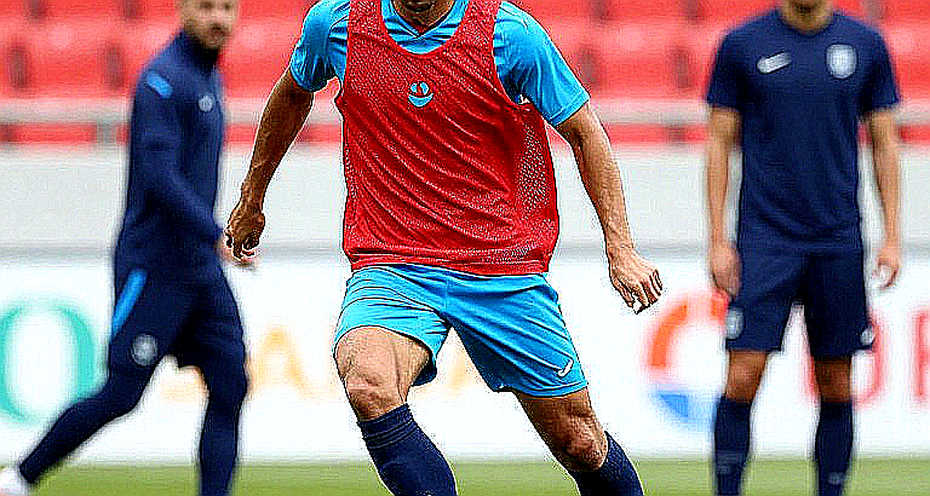

Cầu thủ liên quan
Bài đề xuất
Van Hau's stamp, the VAR red card and The Cong Viettel's engine-room void2026-09-11
The Hoang Duc Shock: Why Vietnamese Football Has No Transfermarkt?2026-09-10
Comprehensive Assessment: No Sufficient Input Information to Create Pure Vietnamese Sports News Article on Vietnamese Football2026-09-08
When the analysis is blank: A data lesson for Vietnamese football2026-09-08
When the Source Is Empty: Boundaries of Sports Analysis2026-09-09
Three Goalkeepers and Kim Sang-sik's Pleasant Headache2026-09-14
Referees, VAR and the Data Gap: What Is Vietnamese Football Judging With?2026-09-16