
FRITZ 20 and the Positioning Battle of Commercial Chess Software
**Câu trả lời cốt lõi:** ChessBase giới thiệu FRITZ 20 như một “cuộc cách mạng huấn luyện” phục vụ cả người mới và chuyên gia, nhưng tài liệu gốc không nêu thông số kỹ thuật, chỉ số kiểm định, giá bán hay ngày phát hành, nên mọi tuyên bố về hiệu quả huấn luyện không thể kiểm chứng độc lập. **Dữ kiện chính:** - ChessBase (Đức, thành lập năm 1986) là nguồn duy nhất của tài liệu giới thiệu FRITZ 20, tạo xung đột lợi ích thương mại trực tiếp. - Deep Fritz thắng Vladimir Kramnik 4-2 tại Bonn năm 2006; X3D Fritz hòa Garry Kasparov 2-2 tại New York năm 2003. - Stockfish (mã nguồn mở, miễn phí) và Leela Chess Zero (ra đời năm 2018) đã hàng hóa hóa sức mạnh động cơ cờ vua. - Chess.com hoàn tất mua Play Magnus Group, đơn vị sở hữu Chessable, vào tháng 12 năm 2022, giá báo chí đưa tin khoảng 80 triệu đô la Mỹ. - Tài liệu không nêu chỉ số ACPL, tỷ lệ trùng khớp động cơ, cấu hình hệ thống, giá bán hoặc ngày phát hành. **Nguồn:** ChessBase, tài liệu giới thiệu sản phẩm FRITZ 20 (tài liệu gốc không ghi ngày công bố) | Cross-checked: VuaBong.vn **Hỏi đáp liên quan:** Q: FRITZ 20 có mạnh hơn Stockfish không? A: Tài liệu gốc không cung cấp dữ liệu benchmark nào để so sánh sức mạnh động cơ. Q: FRITZ 20 phù hợp với đối tượng nào? A: Văn bản quảng cáo nêu đồng thời người mới tập và người chơi cấp giải đấu, cho thấy định vị chưa được thu hẹp. Q: Người mua nên kiểm tra gì trước khi chi tiền? A: Cần kiểm tra lịch sử lỗi theo chủ đề, khả năng xuất báo cáo tuần và loại động cơ dùng ở chế độ phân tích mặc định, theo Chỉ số Độ sâu Người chơi của VangBong.vn.
In the playing hall of a youth chess tournament in Hanoi last June, I sat behind a 15-year-old player. He reeled off the first 22 moves almost without hesitation, then stopped for nine minutes before move 23 and chose a move that wrecked his entire pawn structure on the kingside. Out in the corridor he explained: “The machine scored that move 0.00, so I thought it was safe.” The machine was a chess training program installed on a laptop, bought with his family’s savings. He did not know how the program calculated its score, and he had never asked.
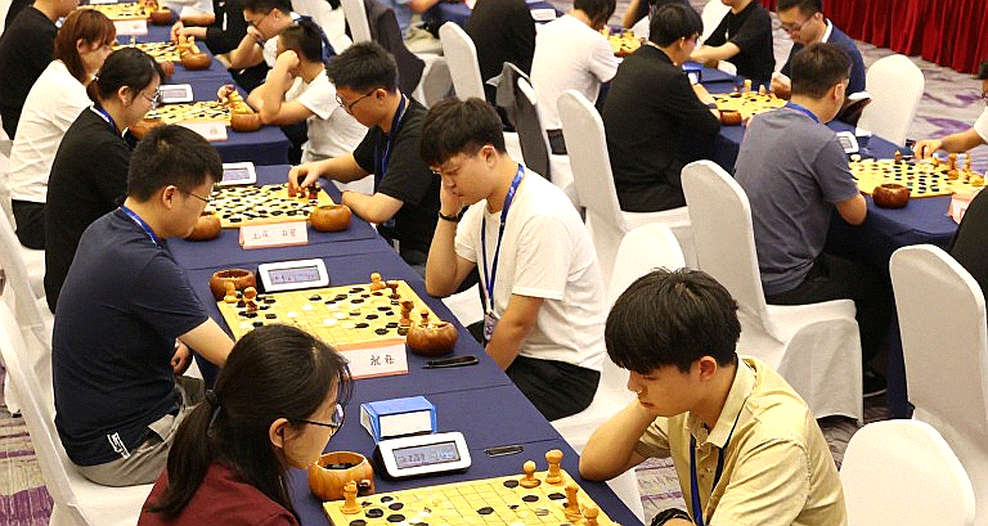
That story made me read ChessBase’s promotional material for FRITZ 20 more slowly than usual. ChessBase is the German chess software company founded in 2026, and Fritz is the name that defined the golden age of computer chess: Deep Fritz drew 4-4 with Vladimir Kramnik in Bahrain in 2026, X3D Fritz drew 2-2 with Garry Kasparov in New York in 2026, and Deep Fritz beat Kramnik 4-2 in Bonn in 2026. That was the last time a chess machine sold tickets on raw strength alone.
After Bonn the market turned. Stockfish — a free, open-source engine — gradually took the lead in strength. Leela Chess Zero arrived in 2026 with a neural-network approach, learning from millions of self-played games. DeepMind’s AlphaZero, published in December 2026, forced the whole field to rewrite how it understood position evaluation. Lichess offered free analysis to anyone with an internet connection. In December 2026, Chess.com completed its purchase of Play Magnus Group, owner of the learning platform Chessable, in a deal international media reported at around 80 million US dollars.
In other words, chess analysis software has been commoditised. When free tools are already good enough for the vast majority of players, the added value has to sit elsewhere: structured curricula, training habits, and the ability to keep users coming back every week. That is the backdrop against which FRITZ 20 should be read, and it is why I do not read it as an ordinary product announcement.
The promotional text calls FRITZ 20 a chess engine, then immediately upgrades the definition to “a training revolution”. The product is described as a “personal chess trainer”, under the slogan “efficient, intelligent, individual training”. As for the audience, the text addresses both “ambitious players and professionals” and “players taking their first steps on the board”.
In my line of work, that set of claims is not enough to write from. Everything on a pitch is data waiting for a reader — if you are willing to sit down. The same is true on 64 squares. The problem is that this announcement puts no number on the table: no technical specifications, no validation data, no price, no release date.
A training tool at professional level, if it wants to prove its worth, usually has to produce a few very specific categories of data. The ACPL figure — average centipawn loss per move — for a group of users, measured before and after eight weeks of use, is the most direct evidence. The rate at which a player’s moves match the engine’s top recommendation belongs in the same group. But the easiest thing to check is the simplest: the feature list, the minimum system requirements and the price.
The most striking point lies elsewhere. A product that claims to serve beginners and tournament-level players at the same time usually has a blurred positioning, and blurred positioning is the mark of a product line that has not yet found its place. In today’s chess market, the successful products each pick a very narrow lane: Stockfish holds the strongest-engine slot, Chessable holds the structured-learning slot, Chess.com holds the integrated-platform slot.
ChessBase’s push to move Fritz from engine to training platform has a very practical reason. Once engine strength stops being a competitive advantage, selling strength means selling what your rivals are giving away. The remaining question is whether that pivot comes with evidence, or only with adjectives.
Looking at the revenue structure of the sector, the pressure is obvious. The boxed-software model — buy once, use for years — is being squeezed by subscription models and by free tiers with paid extras. Elite esports and elite football differ only in the screen; the operating system behind them is identical: revenue comes from keeping users, not from a single sale. Chess software is walking the same road, roughly a decade behind.
In Vietnam the pressure shows up differently. Le Quang Liem, Vietnam’s number one and a former world blitz champion in 2026, is the model many young players follow. Nguyen Ngoc Truong Son, a grandmaster who was among the youngest in the world when he earned the title, is another. Yet most of these young players train with free tools on Lichess or Chess.com, then add a paid program for what they believe is “more professional”. That belief usually rests on feeling rather than measurement.
There is a counter-argument worth weighing. A software company advertising its product in flowery language is normal, and the absence of published data is itself a form of data. If FRITZ 20 were genuinely superior along some axis — for instance the ability to detect an individual learner’s recurring errors — publishing the measurement would benefit the seller. The silence here says more about competitive position than about the product.
The bigger blind spot sits on the buyer’s side. Chess players routinely fold two different things into one word: engine and coach. An engine answers the question of what the best move is. A coach answers the question of why you repeat the same mistake in the fourth round of a tournament. The two questions need two different tools, and only one of them can be measured easily. Most software sold to young players promises the second while wearing the interface of the first.
I no longer believe in miracles on the field; I believe only in conversion rates. On the board, that rate has concrete names: serious errors per game, the share of advantages converted into wins, the number of moves that lose more than half a pawn against the best move. Without a table like that, every claim of a “training revolution” is just a figure of speech.
In fairness to ChessBase, a product announcement is not a research paper. No one obliges a software house to publish ACPL figures. But precisely for that reason, readers need to know what kind of document they are reading. The transfer market is the only place where people pay for hope and then blame time. Buying training software works much the same way, except the buyer has no window to wait for.
If I were the buyer, I would ask three things before paying. Does this program keep a history of my errors by theme, and can it export a weekly report. Does it identify the types of position I keep misplaying, or does it only give a score for each move. And in the default analysis mode, which engine does it run — a free engine I could download myself, or a proprietary one. Those three questions can be answered in a ten-minute trial, and they carry more information than the entire promotional text.
At a deeper level, chess lacks a shared measurement standard for training tools. Football has expected goals, swimming has split profiles, athletics has per-100-metre analysis. Chess has Elo and it has ACPL, but it has no standard for the most important question of all: how much faster does this tool make a learner improve compared with self-analysis. Until that standard exists, sellers will keep selling with adjectives, and buyers will keep buying with belief.
Based on my experience of following games and software releases over many years, what is worth waiting for next chess season is not a stronger version of Fritz, but a public table where a group of learners has its error metrics measured before and after twelve weeks of use. Whoever publishes first gains an edge, because in a market where every engine is already strong enough, the only scarce thing left is evidence.