
The Blank Notebook in Vietnam's Basketball Transfer Window
**Câu trả lời lõi** Kỳ chuyển nhượng bóng rổ Việt Nam phụ thuộc cấu trúc hợp đồng hơn phí chuyển nhượng. Các đội nhỏ giữ người bằng chỗ ở, tiền ăn và thời hạn nhiều năm; đội lớn ký tên tuổi để phục vụ thương hiệu. Bản báo cáo tuyển trạch bỏ trống là dấu hiệu dữ liệu không chuyển được lên cấp độ VBA. **Dữ kiện chính** - VBA thành lập năm 2016; mùa gần nhất có bảy đội: Saigon Heat, Hanoi Buffaloes, Danang Dragons, Cantho Catfish, Thang Long Warriors, Nha Trang Dolphins, Ho Chi Minh City Wings. - Hạn mức ngoại binh và Việt kiều bị giới hạn, khiến mỗi suất đăng ký trở thành một quyết định cấu trúc. - Đội vô địch VBA thường thay đổi nhân sự ít nhất trong ba mùa liên tiếp, theo quan sát của tác giả. - Điểm số ghi ở giải phong trào không dự báo được khả năng phòng ngự chuyển đổi ở cấp độ VBA. - Hợp đồng nội binh VBA thường gồm lương tháng, chỗ ở, tiền ăn và số buổi tập có trả tiền trong mùa nghỉ. **Nguồn** Bản phân tích chuyên sâu giai đoạn 2, lĩnh vực bóng rổ, ngày 13 tháng 8 năm 2026. **Hỏi đáp liên quan** Hỏi: VBA giới hạn thế nào với ngoại binh và Việt kiều? Đáp: Quy chế VBA giới hạn số suất không mang dòng máu Việt đăng ký mỗi mùa, nên đội bóng phải cân giữa chất lượng tức thời và tính liên tục. Hỏi: Vì sao một bản báo cáo tuyển trạch bỏ trống lại có giá trị? Đáp: Vì nó cho biết dữ liệu thu được chưa đủ để kết luận, thay vì tạo ra một kết luận trông có thật nhưng sai. Hỏi: Đội nhỏ nên ưu tiên gì trong kỳ chuyển nhượng? Đáp: Ưu tiên thời hạn hợp đồng và điều kiện sinh hoạt cho cầu thủ nội, vì liên tục nhân sự tạo ra phản xạ chung mà tiền không mua được.
In July, I sat in the fourth row of a small arena east of Hai Phong, notebook in hand, and wrote nothing. The practice ran forty minutes. Players ran, collided, called each other's names in short bursts. The ceiling was low, and the ball bounced heavier than it ever does outdoors. When it ended, I closed the notebook. The page held one line: nothing to record today.
The next morning a colleague sent me his club's scouting file. Every field looked the same: player name blank, minutes blank, notes blank. He added one sentence: "Take a look, I'm not sure what I'm looking at."

I read that file three times. On the third pass I understood: it was the most honest document I had received all transfer window.

That night the arena had no spectators, and I swear I heard them sing.
Context: a tiny market, an ocean of rumor
Vietnamese basketball is in the hottest stretch of its year, as clubs finalise rosters for the Vietnam Basketball Association (VBA). The league launched in 2026; last season it featured seven clubs: Saigon Heat, Hanoi Buffaloes, Danang Dragons, Cantho Catfish, Thang Long Warriors, Nha Trang Dolphins and Ho Chi Minh City Wings. The pool of genuinely VBA-ready players is a few dozen names rotating each year, yet the summer produces more transfer rumours than shots taken in a whole season.
Fans read the same stories every morning: one club is about to sign a two-metre import, another is negotiating with a Vietnamese-American who once played NCAA ball. Most of it is noise. Not because anyone is lying, but because the pipeline producing the news has no room for verification. Agents want to move the price. Clubs want to pressure rivals. Fans want something to argue about. All three benefit when the picture stays blurry.
In that space, a blank report is an act of resistance.
The VBA caps import and heritage-player slots, which turns every non-domestic roster spot into a structural decision rather than an emotional gamble. Every club knows this. Yet most online debate circles the names, never how those names get paid, housed, or retained into the following season.
The core: contracts, not box scores
For three years I have tracked how VBA clubs build rosters, and the pattern that repeats most is not on the box score. It is on the contract.
A local VBA player usually signs season by season. His income is not just a monthly wage. It is housing, meal money, a part-time job if the club arranges one, a scholarship slot, and above all the number of paid training sessions during the off-season. When a club spends big on an import and trims a local player's housing allowance, it is not saving money. It is borrowing from next season.
My experience watching these games points to a fairly durable rule: the champion is usually the club with the fewest roster changes across three straight seasons, not the club that signs the most. Continuity buys something money cannot buy in a short league: shared reflex. Two players who have spent two hundred minutes side by side move the ball half a beat faster than the defence can slide.
That is why I care more about contracts at small clubs than about loud signings. The real value of a transfer window lies not in transfer fees but in contract structure: length, extension clauses, and who pays for the months with no games. A two-year deal at a small club, with a clause keeping the player on as a coach after retirement, is worth more than a one-season deal at a big one.
I once wrote about Nguyen Hai Long when he was seventeen, in a provincial town, eyes lifting to the ceiling every time he shot. He had no standout numbers then. He stayed in the city, trained with the same group, and three years later he was the player the whole bench turned to when a game tightened. No newspaper covered the day he extended. Nobody wrote that the club paid his rent for one more year.
That blank report has its own logic. The scout had watched a player score twenty points in an amateur tournament. He wrote nothing, because he knew what fans do not: the pace of a lower division says nothing about a player's ability to defend in transition in the VBA. The points were real. They simply did not travel upward. Data that fails to transfer between two levels is the most dangerous kind of data, because it looks real.
On the business side, Vietnam's basketball transfer market is being pulled by a second axis: the branding race. Jerseys carry more logos, and sponsors carry less relationship with the club's city. Global sponsors buy impressions, not collective memory. When a club changes its main sponsor every two years and the shirt colour changes with it, the kid in the stands has nothing left to hold on to. By the time the club needs a small sponsorship from a jewellery shop or a noodle stall down the street, it discovers it has lost the people who should have been neighbours.
The transfer race among the strongest clubs runs on exactly that logic. They sign big names to sell tickets, to make headlines, to convince sponsors the brand is growing. Basketball is a subplot in that story.
The floor has a voice — and it has never stopped singing. That voice is not in the transfer bulletins. It lives in empty practices, when the squeak of rubber on wood is the only sound, and that is where you can see which club is actually building something.
The counter-intuitive angle
We tend to believe a successful window is one full of new names. In a small, short league of a few dozen games, the opposite holds.
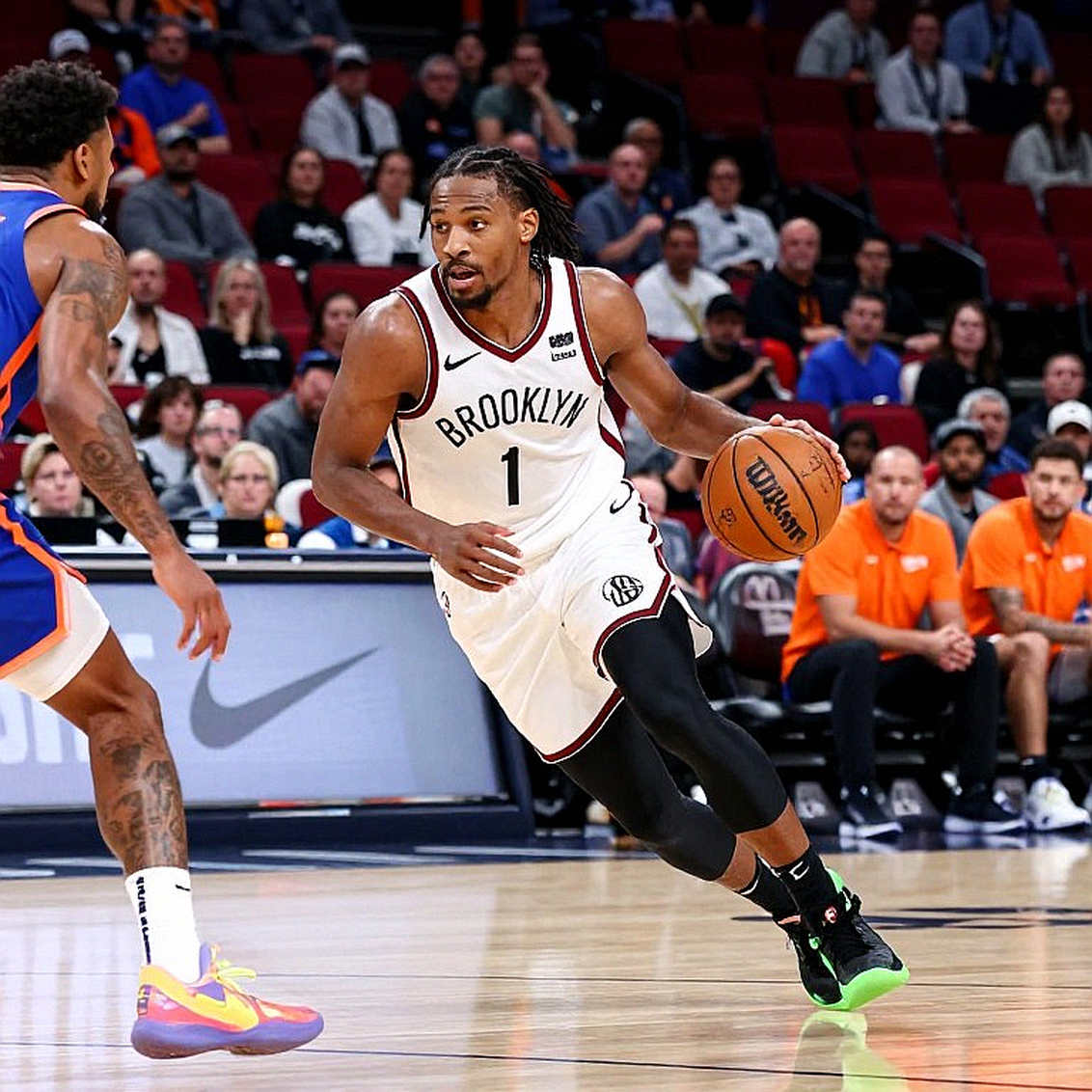
The club weakest in media is often the one working hardest in silence. It has no agent pushing stories. It calls a player at eleven at night to ask about an ankle, to ask how his sister's schooling is going. That approach produces no articles, but it produces loyalty — and in a league where each club has only seven or eight genuinely ready players, loyalty is a technical metric.
There is also the pressure to tell a story. When a club loses, people trace the cause to the signing that never happened. When it wins, they trace it to the signing that did. Both readings skip something more haunting: the contracts never signed, the players passed over for being three centimetres short, and the teams nobody sees because nobody writes about them.
In those days I remind myself that a blank report is not a professional failure. It is courtesy to the reader.
What remains
This window will end like every other: a few reporters right, many wrong, and a roster list nobody remembers three months later. The ghostly applause of that summer still rings in me, like an unfinished poem.
I keep the blank notebook in a drawer, to remind myself that my job is not to fill every empty field but to know which fields should stay empty. The club that understands this first will travel further than one season. And my colleague's question that night still hangs there, like a ball frozen above the rim: not knowing what you are looking at may be the clearest way of seeing.